

Examination
E X P A N D E D P H O T O G R A P H Y
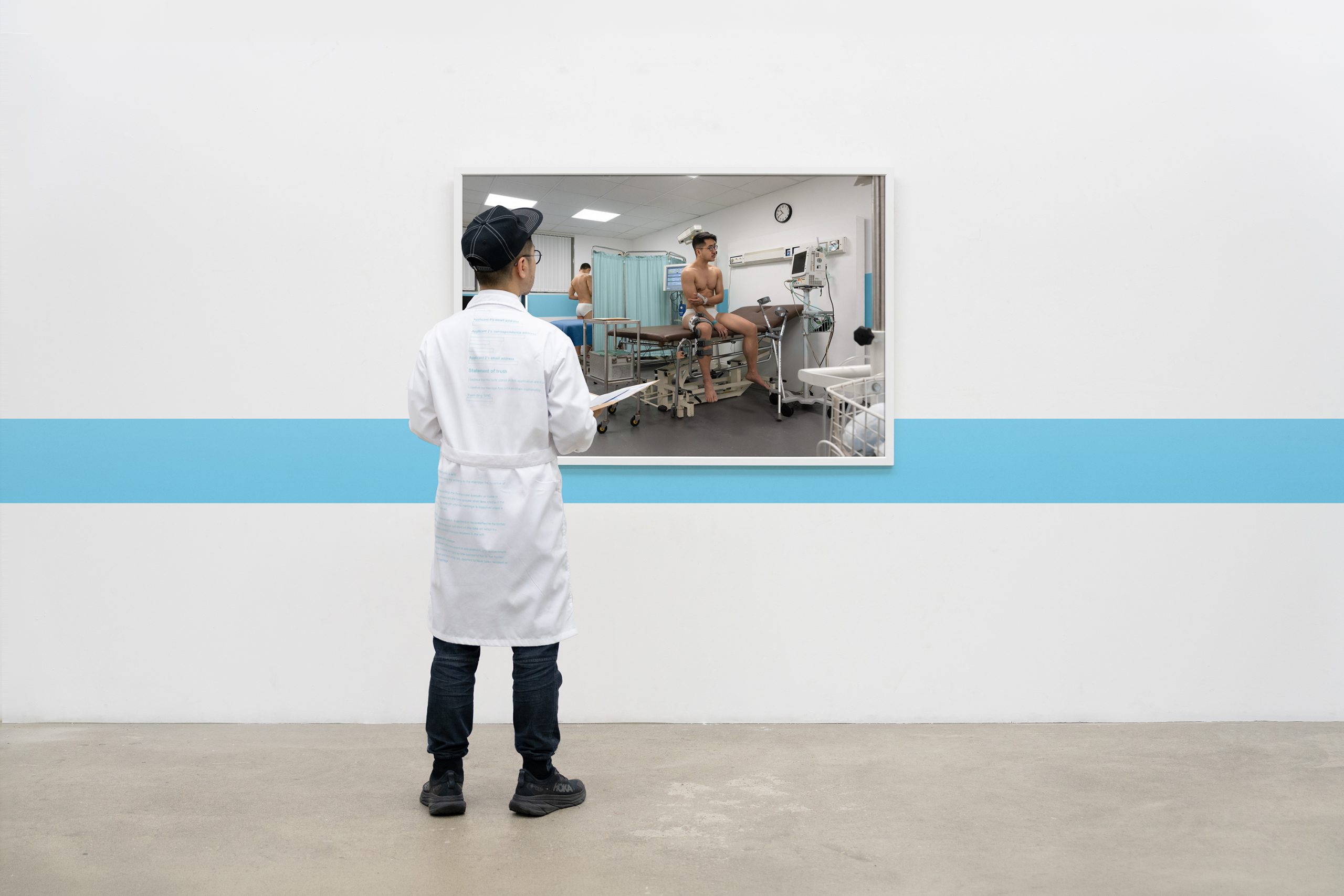
Within institutional frameworks, individuals are often read through images and documents. These forms appear to offer access and understanding, generating the impression that a person can be known through what is recorded. However, such understanding is constructed through the logic and language of the system itself, rather than through any direct proximity to the individual. Across the series, identity is presented not as singular or fixed, but as situational and continuously rearticulated through these structures.
Examination is not merely an observation of systems, but an appropriation of their language as a means of self-examination. Emerging from the experience of migration from Hong Kong to the United Kingdom, and a shift back towards artistic practice, the works are shaped by a period of exposure that is both stripped and difficult to confront. The self is placed in a position of scrutiny, initially appearing as the subject under examination, but gradually shifting towards a more active role. By the later works, the boundaries between subject and authority become less stable, as the artist assumes the role of examiner while remaining the one being examined.
Methodologically, the series combines staged photography with the transformation of documents and objects. Elements such as medical devices, legal records, and markers of identification are reconfigured into images and installations, retaining their institutional associations while opening up alternative modes of viewing. From this perspective, Examination operates as a form of self-portrait constructed through institutional language. Identity is not simply lived, but recorded, named, worn, and presented through systems that claim authority. In being translated into forms of documentation, the self is not only described, but continuously reconstituted through the structures that seek to define it. What appears to be a stable record instead reveals an instability at the core of how a person is known, where the act of examination produces, rather than confirms, the subject it claims to represent.
To Be Honest
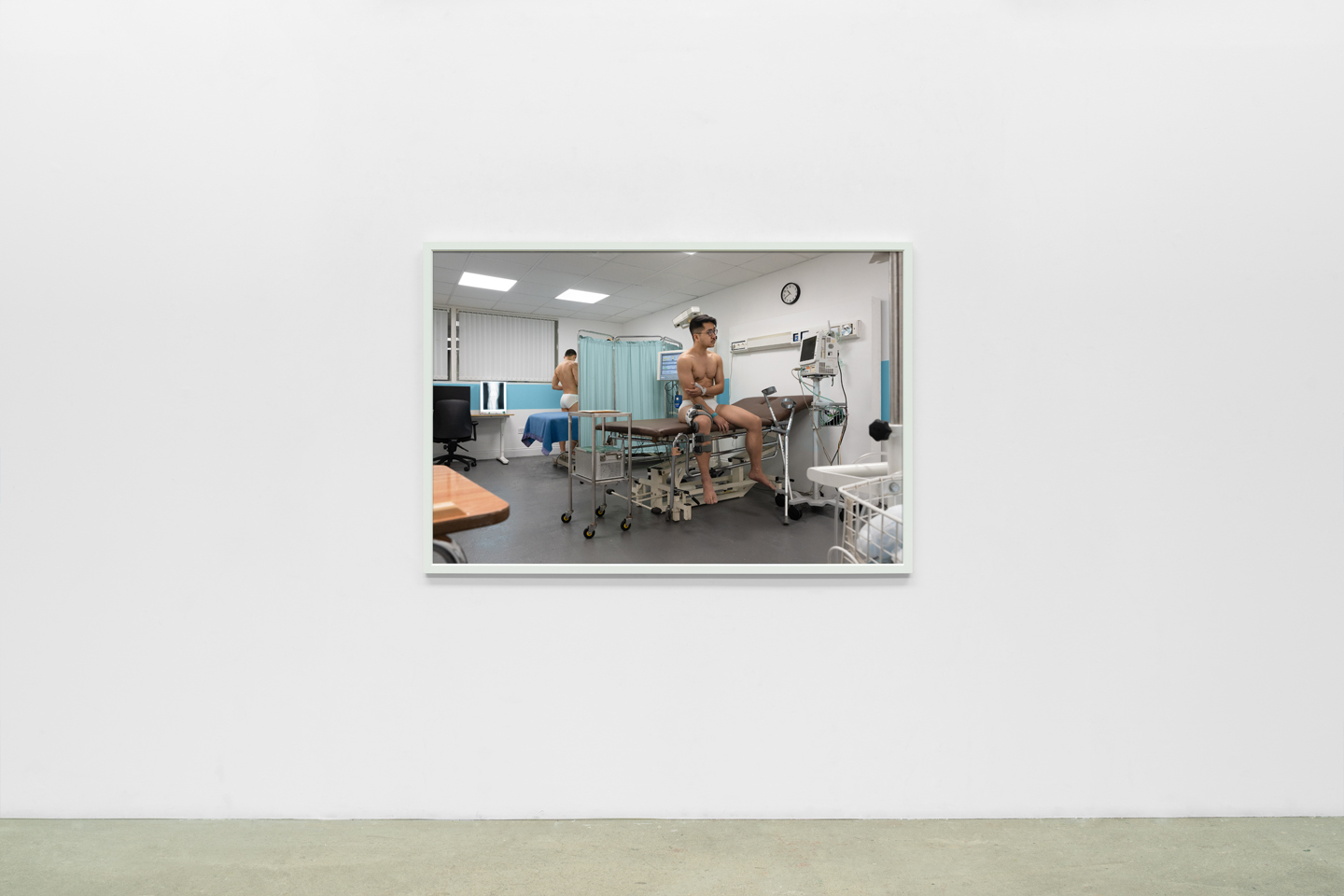
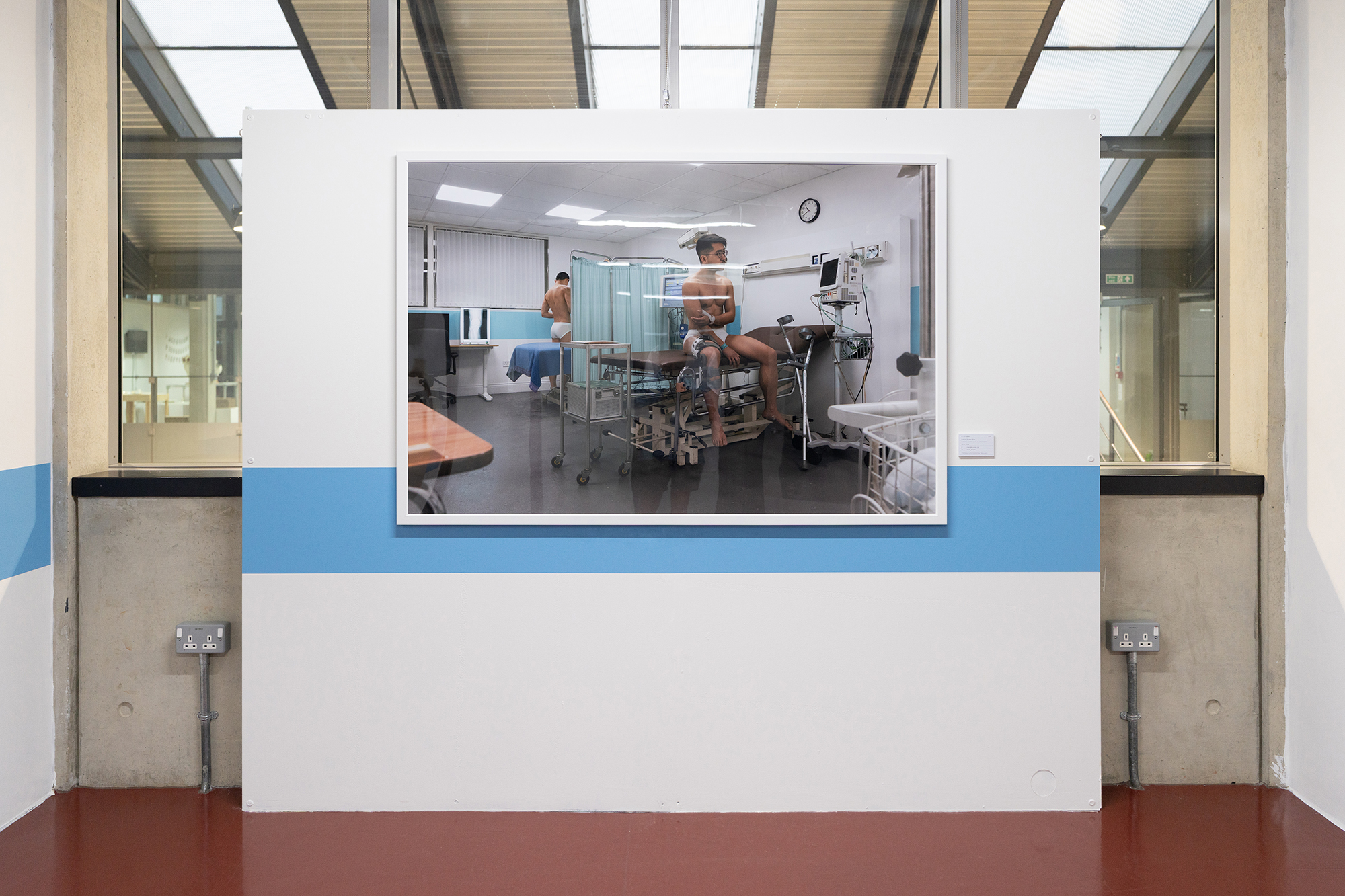
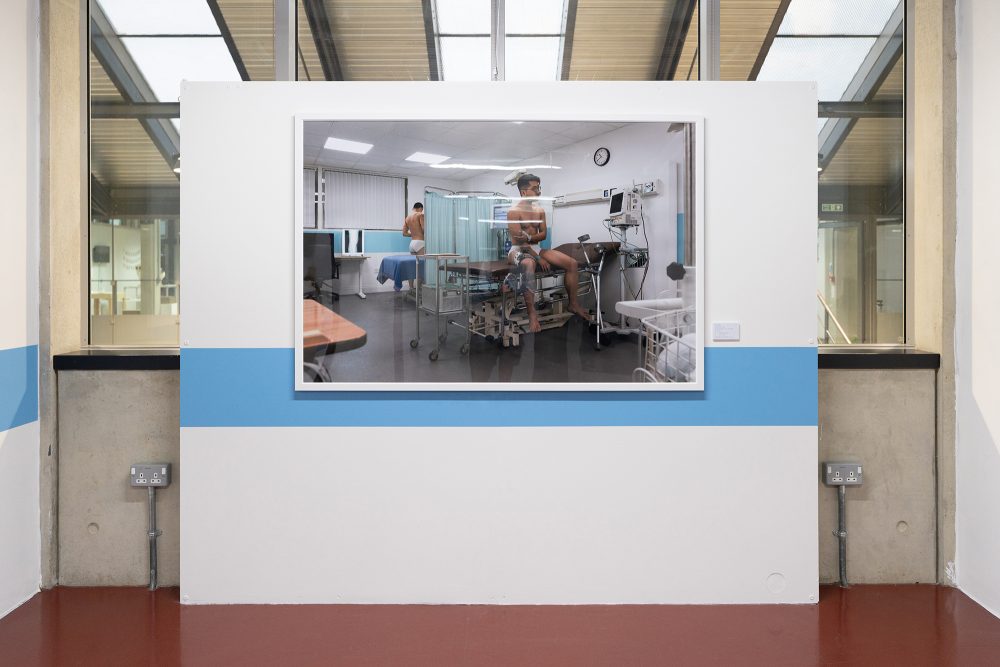
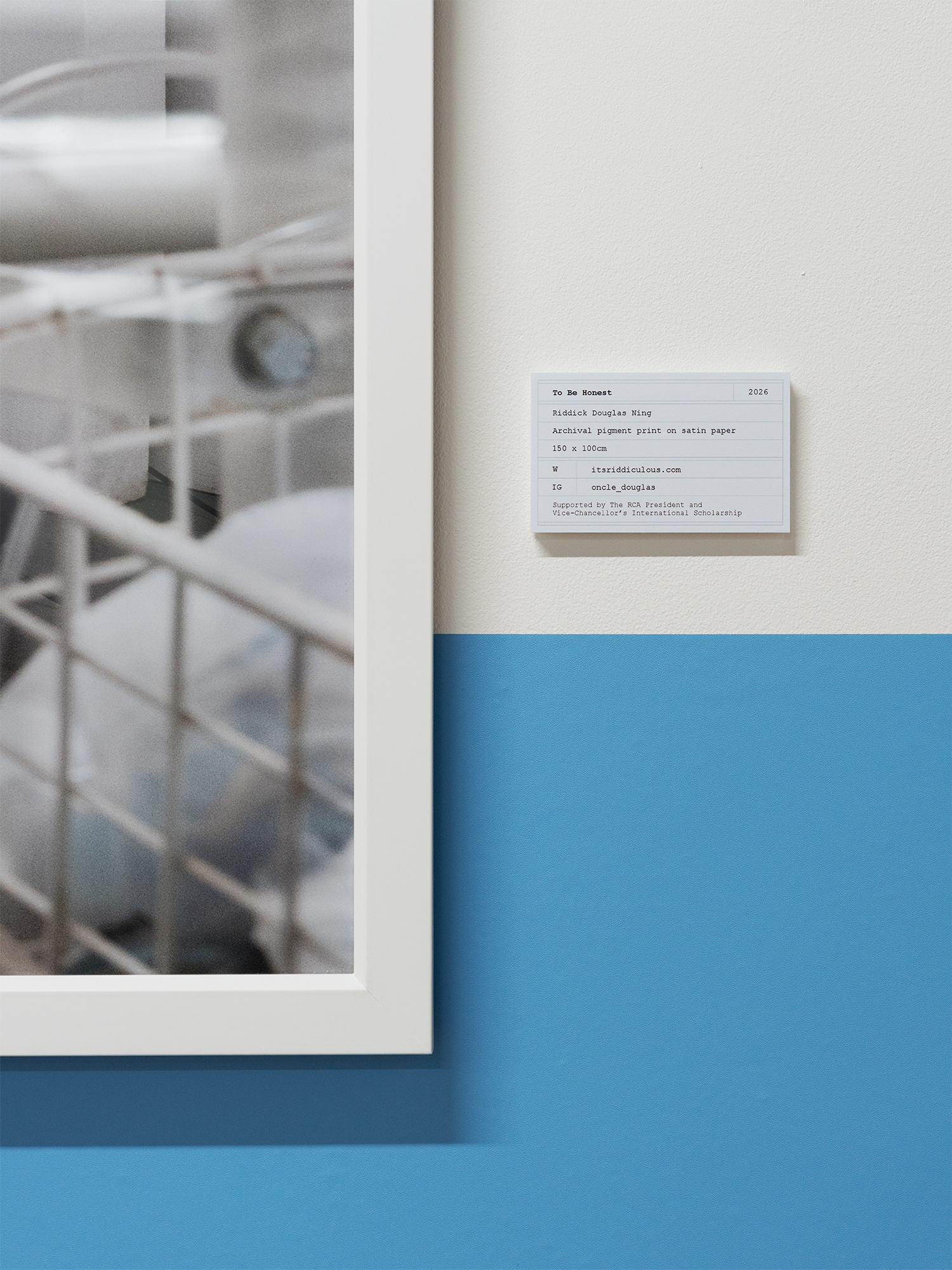
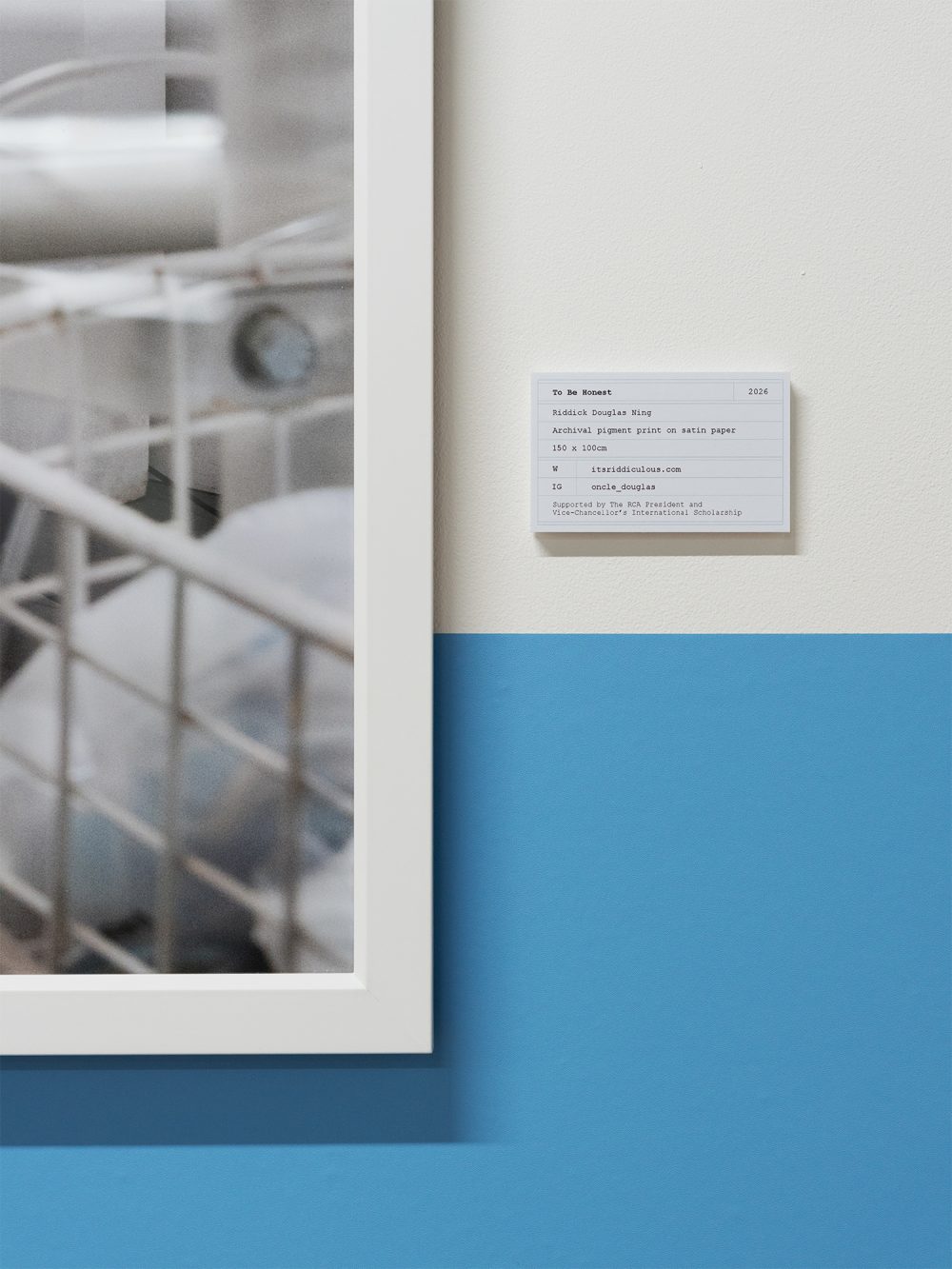
To Be Honest is a staged photograph set within a hospital examination room. The undressed body is supported by medical braces, held in a suspended state where movement is restricted. This condition reflects experiences of injury, ageing, and persistent discomfort, where the body is no longer fully autonomous but subject to control. It also parallels a psychological state shaped by migration, in which familiar networks of support and relationships remain elsewhere. The self becomes out of step with its surroundings, neither fully grounded nor fully mobile.
Within the clinical environment, the body is placed under a system of observation. A medical wristband and an obsolete X-ray viewer situate the figure within a framework that identifies, records, and attempts to interpret it. The body is rendered as something to be read, yet what is made visible remains incomplete. While masculinity is presented in a state of exposure and vulnerability, intimacy and desire are held within conditions of controlled visibility.
The title To Be Honest suggests openness, yet within this constructed condition, honesty does not function as simple revelation. It emerges instead as a negotiated state shaped by the conditions of being seen.
Irretrievably
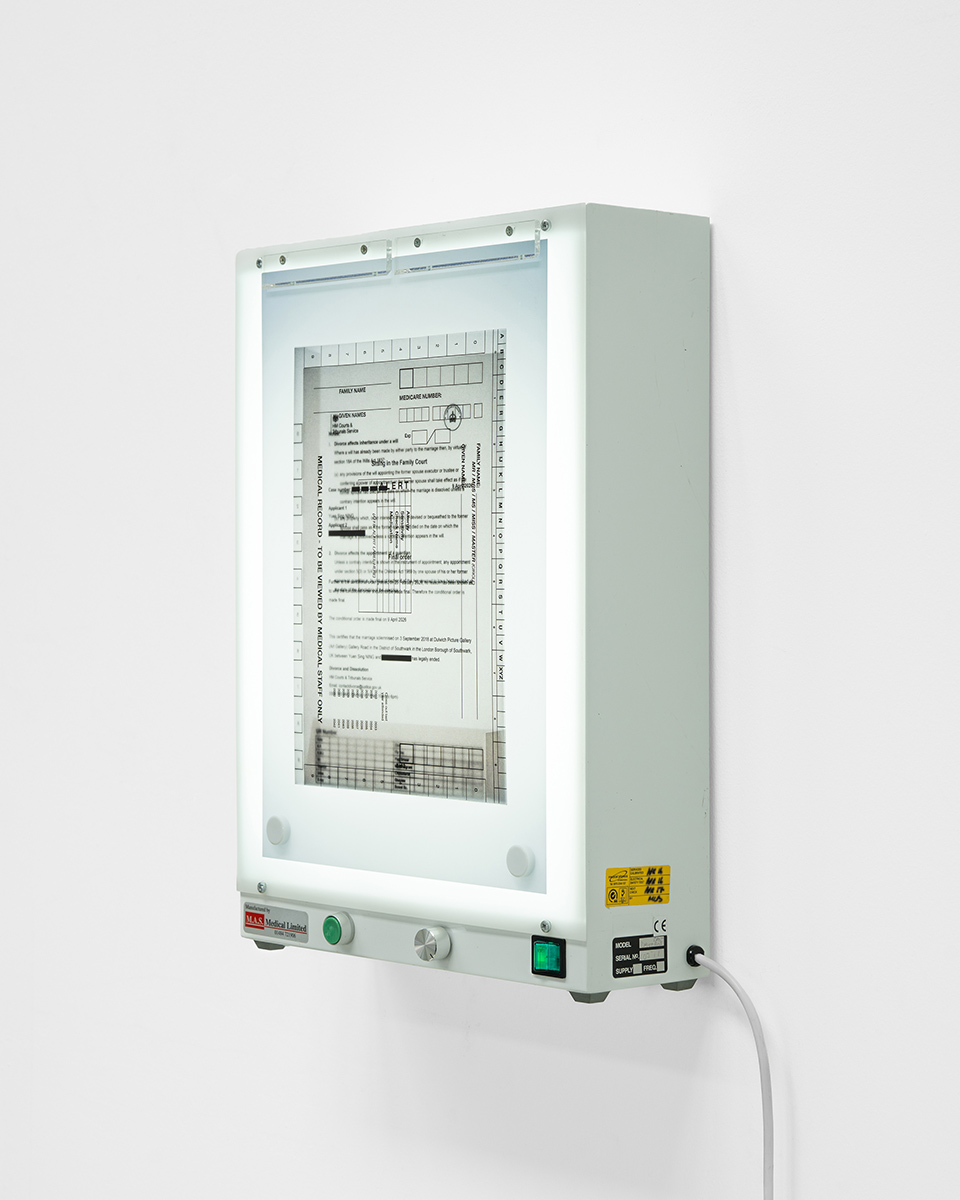
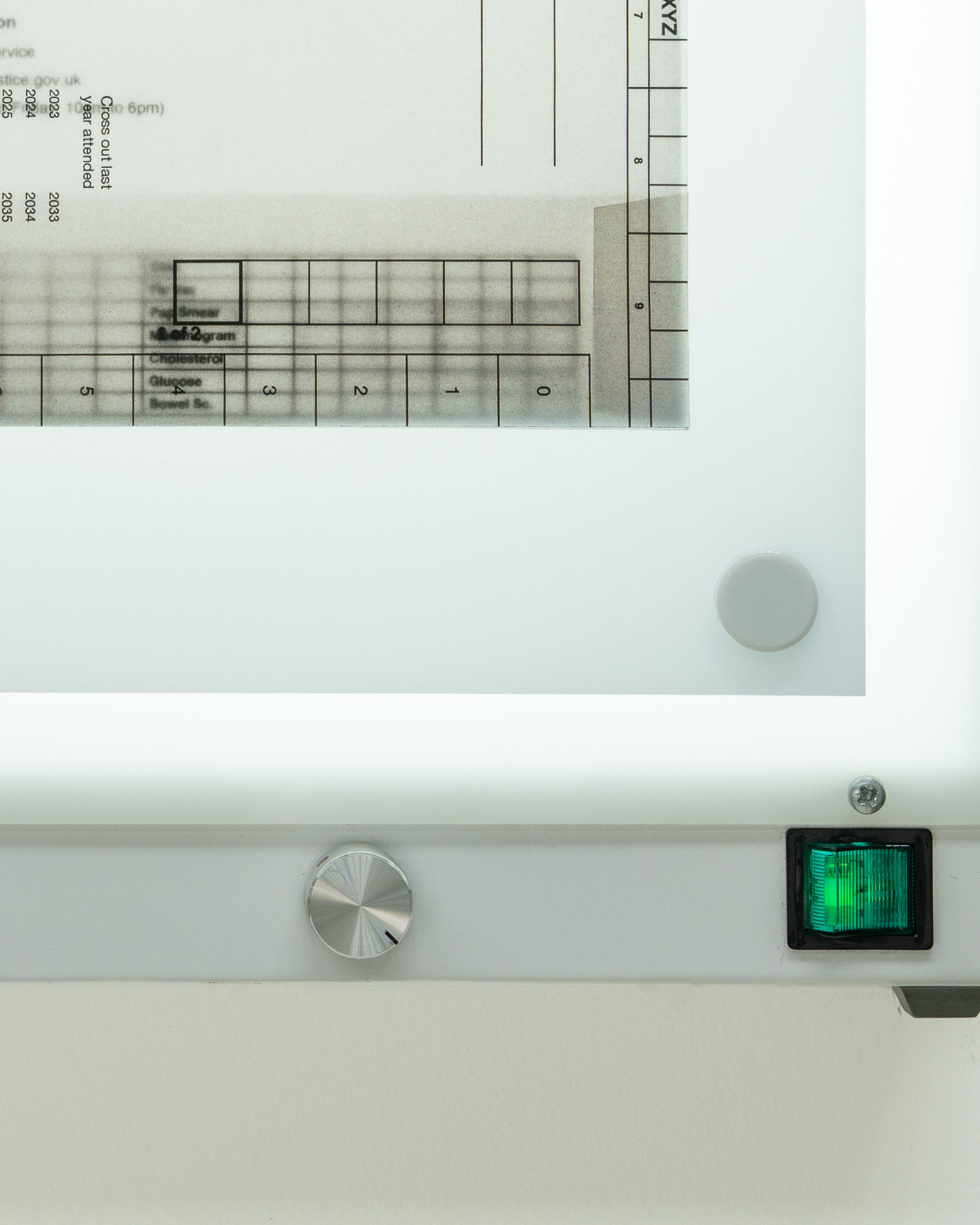
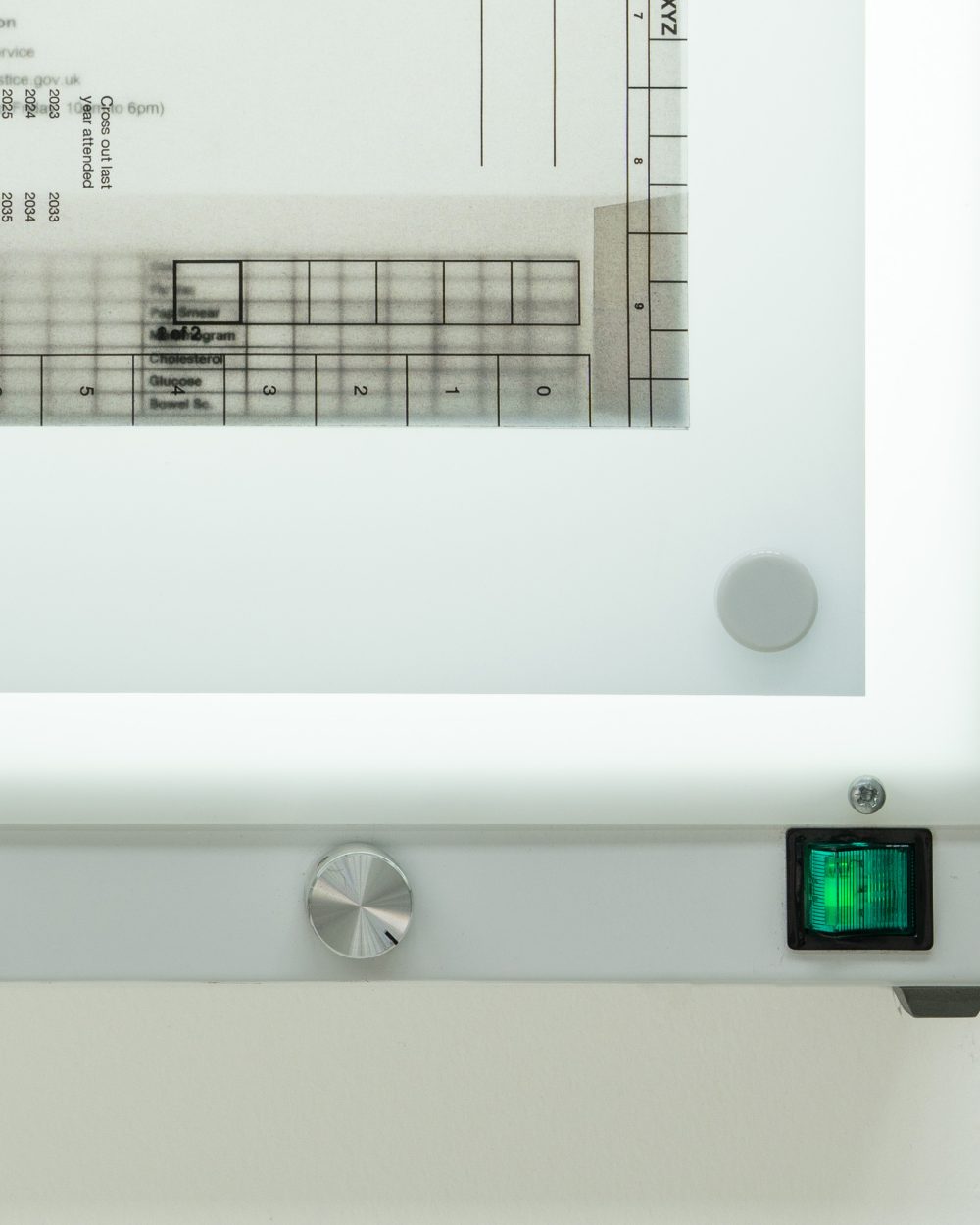
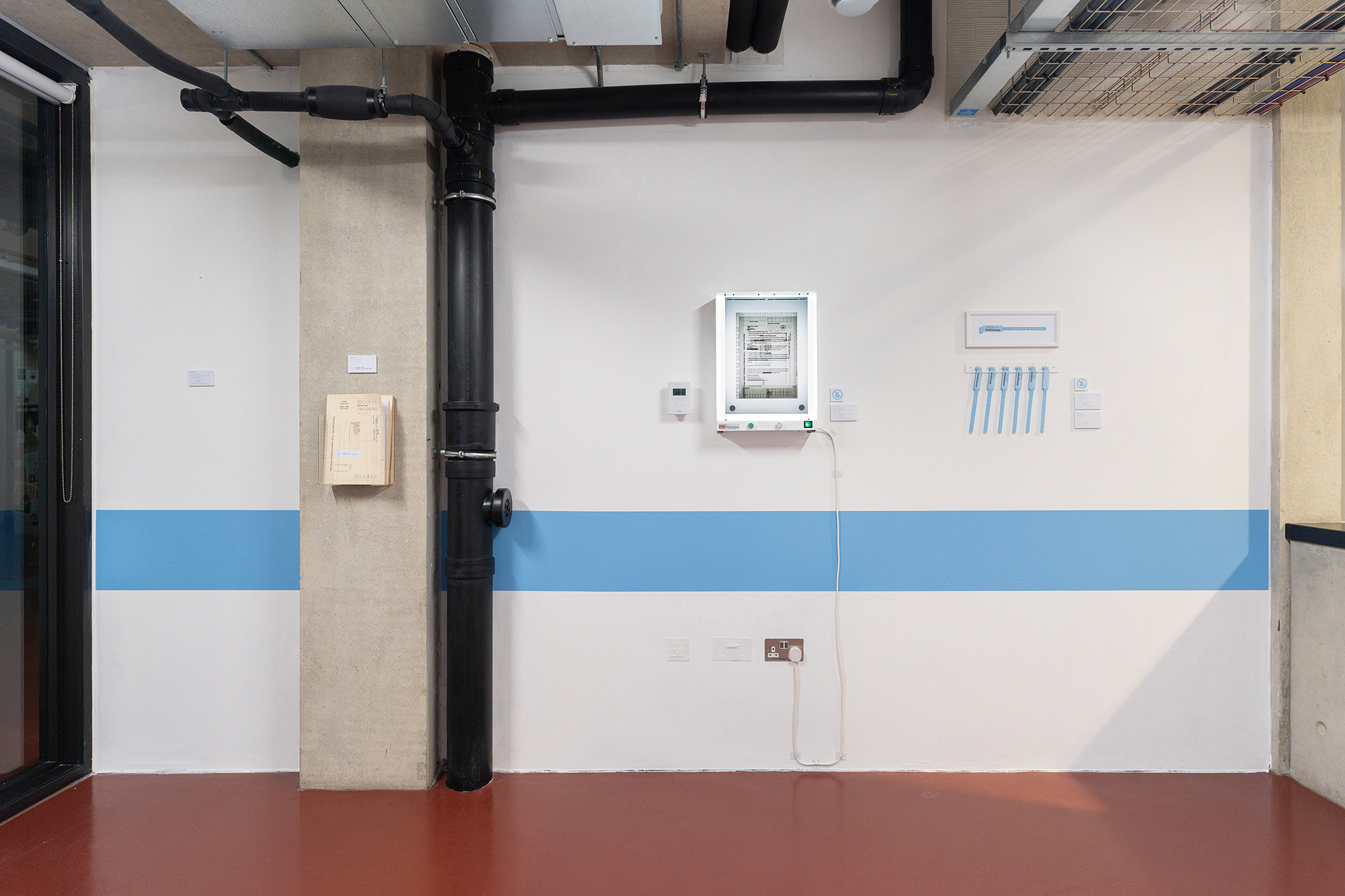
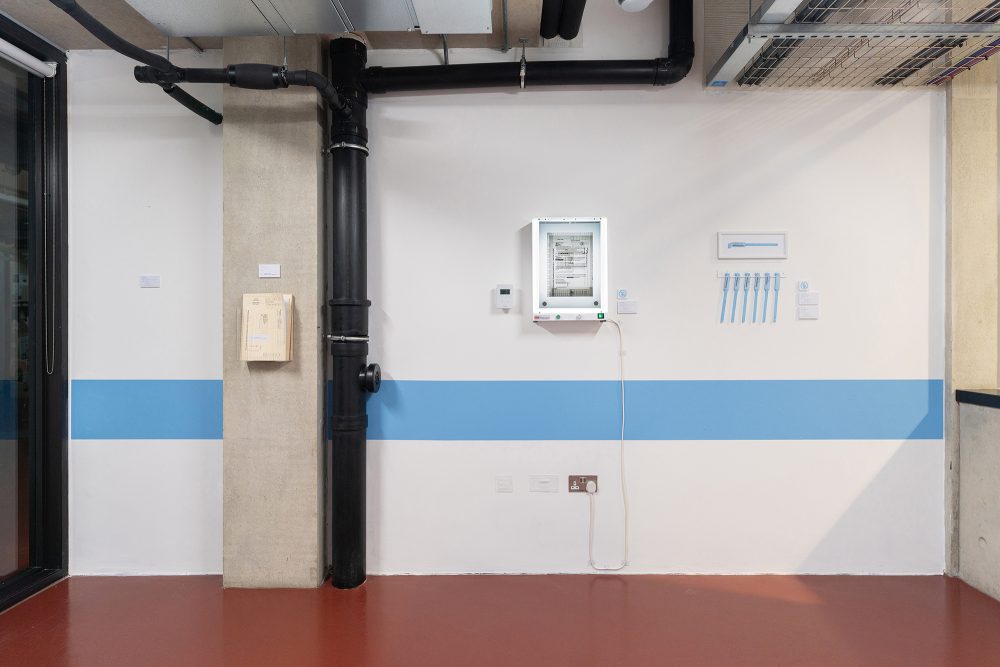
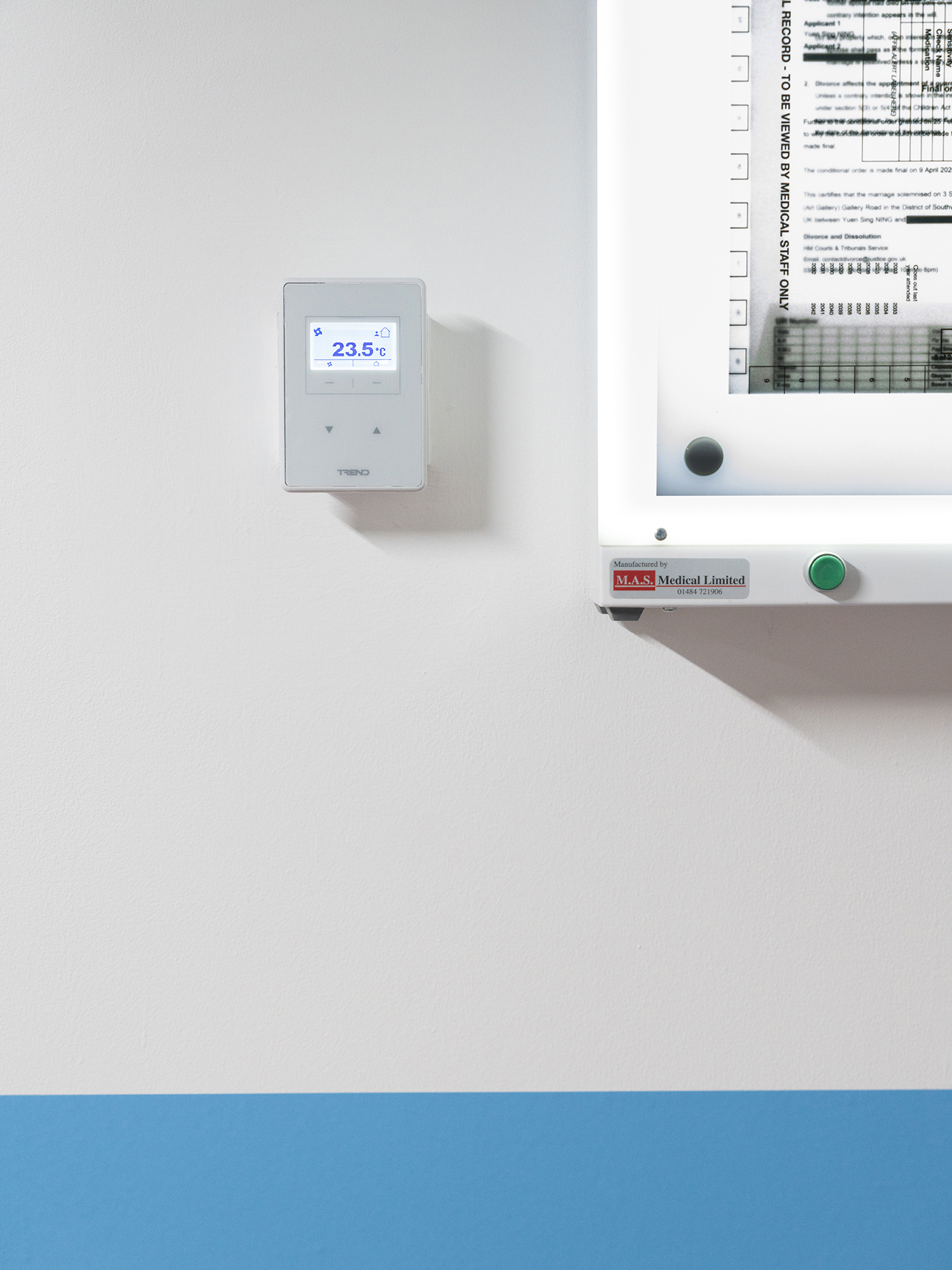
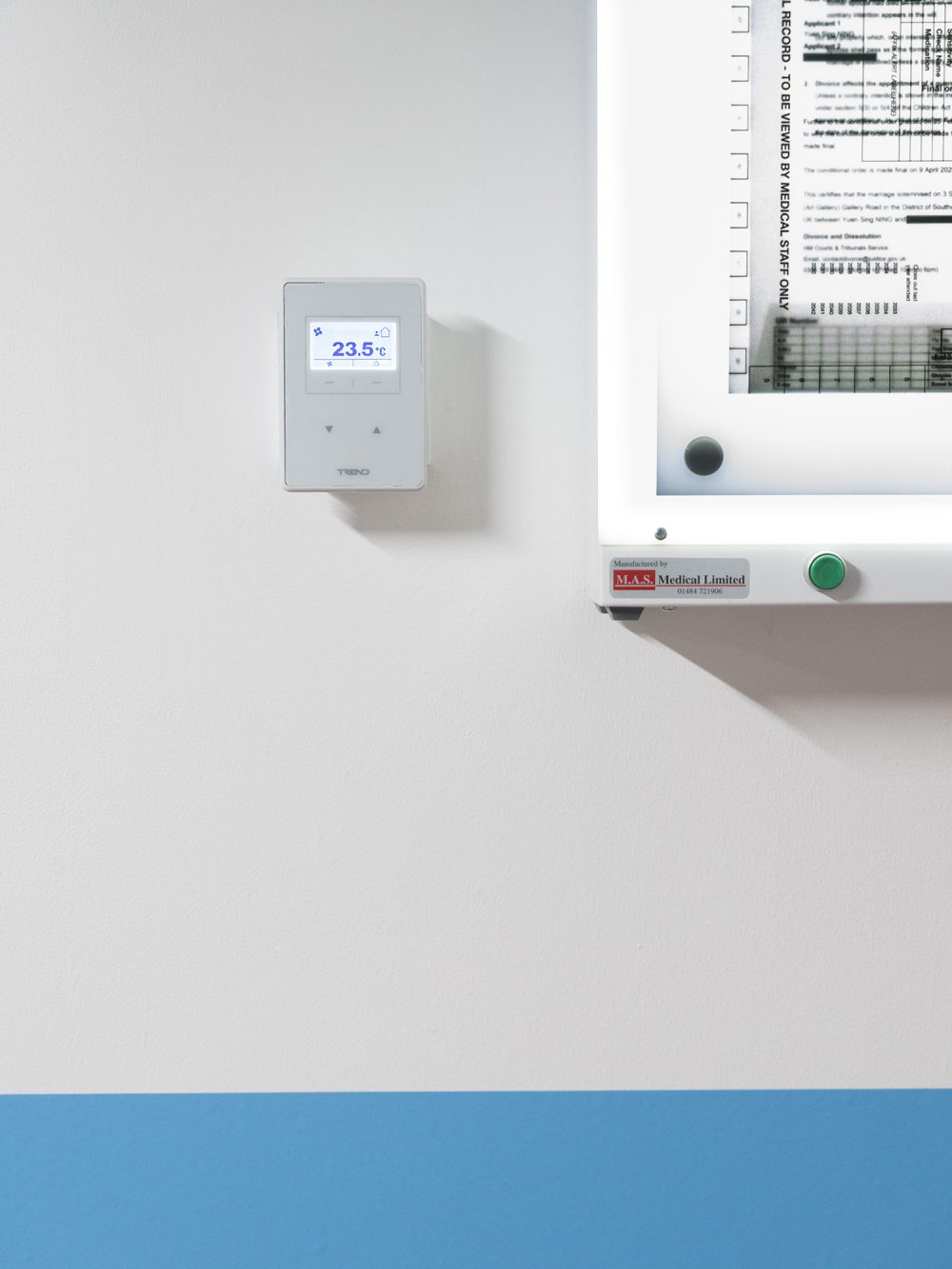
Irretrievably centres on a final order, a legally issued divorce document. The document is re-materialised through tracing paper, placed within a medical folder, and presented on an obsolete X-ray viewer before being rephotographed and produced as a backlit image. Through this process, the document undergoes a shift in language and form. The legal artefact is repositioned as a diagnostic image. Legal and medical frameworks intersect, where a relationship is no longer described but appears to be examined, read, and interpreted.
The work draws on the legal statement that a marriage has “broken down irretrievably.” The term suggests a condition that is final and irreversible, where what has taken place cannot be undone. This sense of irretrievability extends beyond the relationship itself, applying also to the document that records it and the image that re-presents it. Each stage reinforces a state of permanence. The work reflects on how systems define and conclude personal experience. What is declared final is not only documented, but structured into a form that resists revision, where alternative readings are held at a distance.
The First Dress & What To Wear
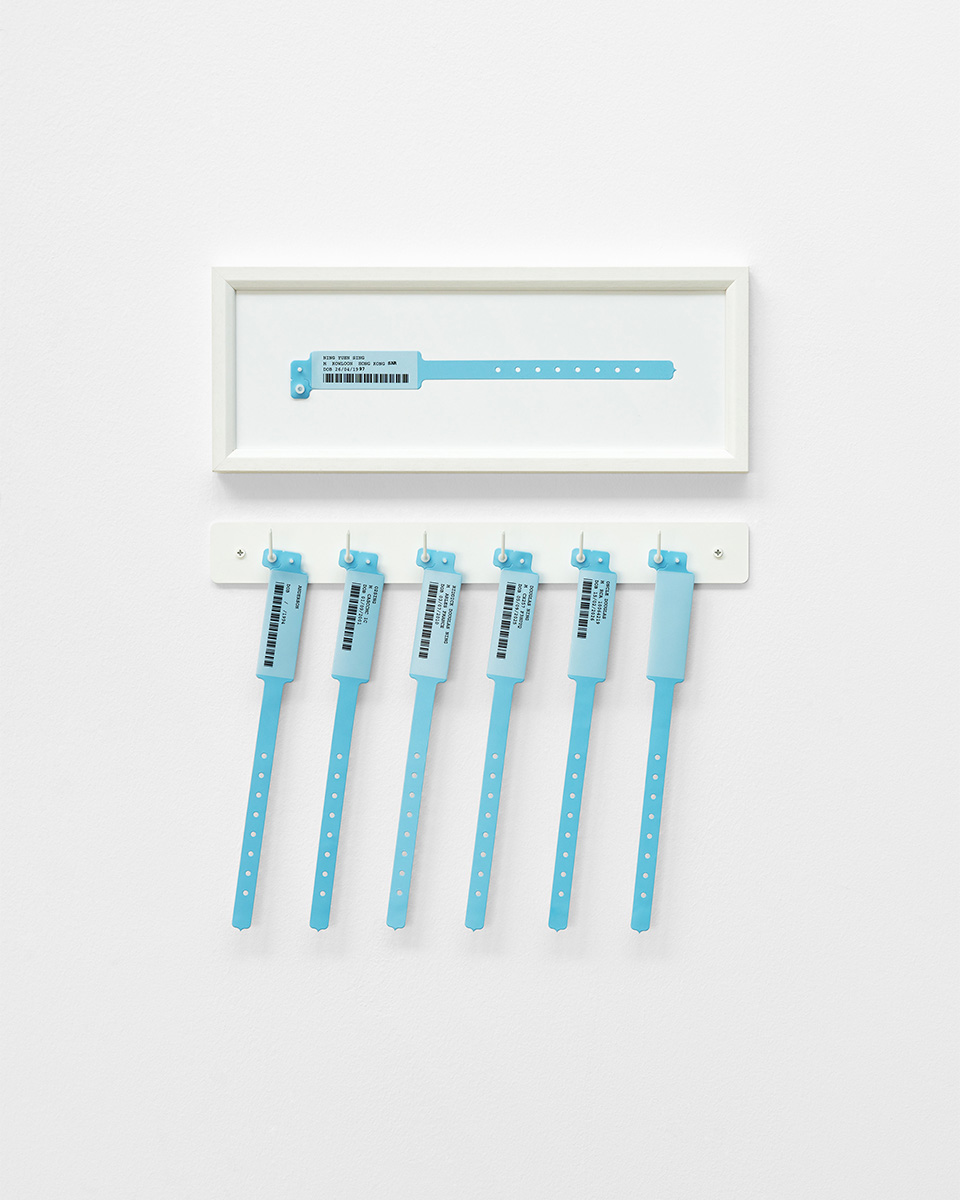
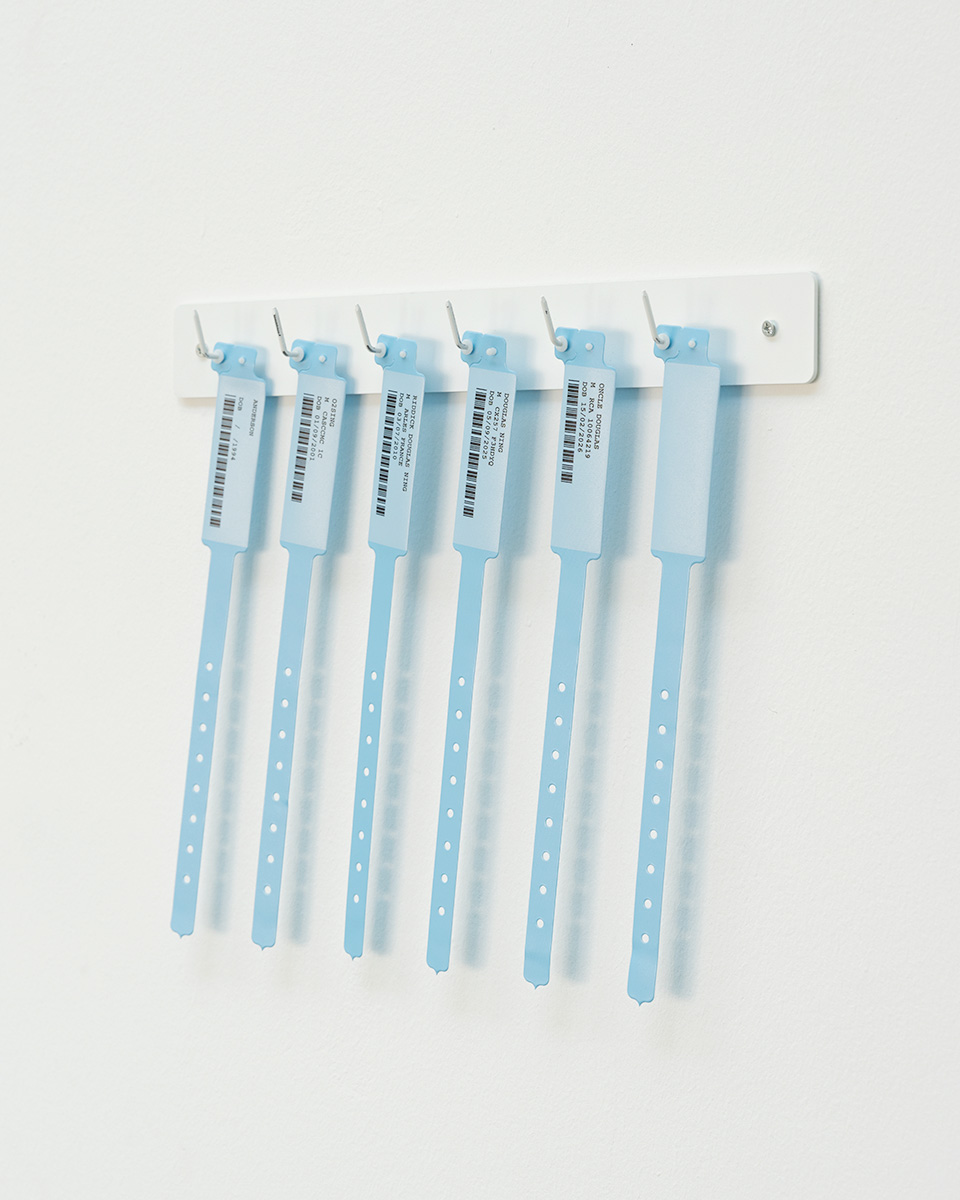
The First Dress and What To Wear examine identity as something inscribed, accumulated, and continually revised through institutional and social frameworks. Both works centre on the medical wristband, an object typically issued at birth to register and stabilise identity through fixed information such as name, gender, and place and date of birth.
In The First Dress, this initial act of registration is subtly disrupted. The birthplace is altered with slightly misaligned text, while the year of birth is partially obscured and overwritten. These minimal interventions adopt the visual language of official correction, suggesting an update while simultaneously enacting an alteration. What appears to be a stable record becomes a site where identity is rewritten, repositioned within broader political and historical contexts. The work foregrounds how identity, rather than being fixed, remains vulnerable to modification by authoritative systems that record, name, and define the individual from the outset.
Extending this premise, What To Wear presents a wall-mounted rack of wristbands bearing multiple names associated with the artist, including birth name, nickname, artist identity, online alias, and new names formed through migration. The singular authority of institutional identification is multiplied and destabilised here. Identities are no longer fixed, but interchangeable and situational, adopted in response to shifting contexts, relationships, and modes of address.
The Examiner
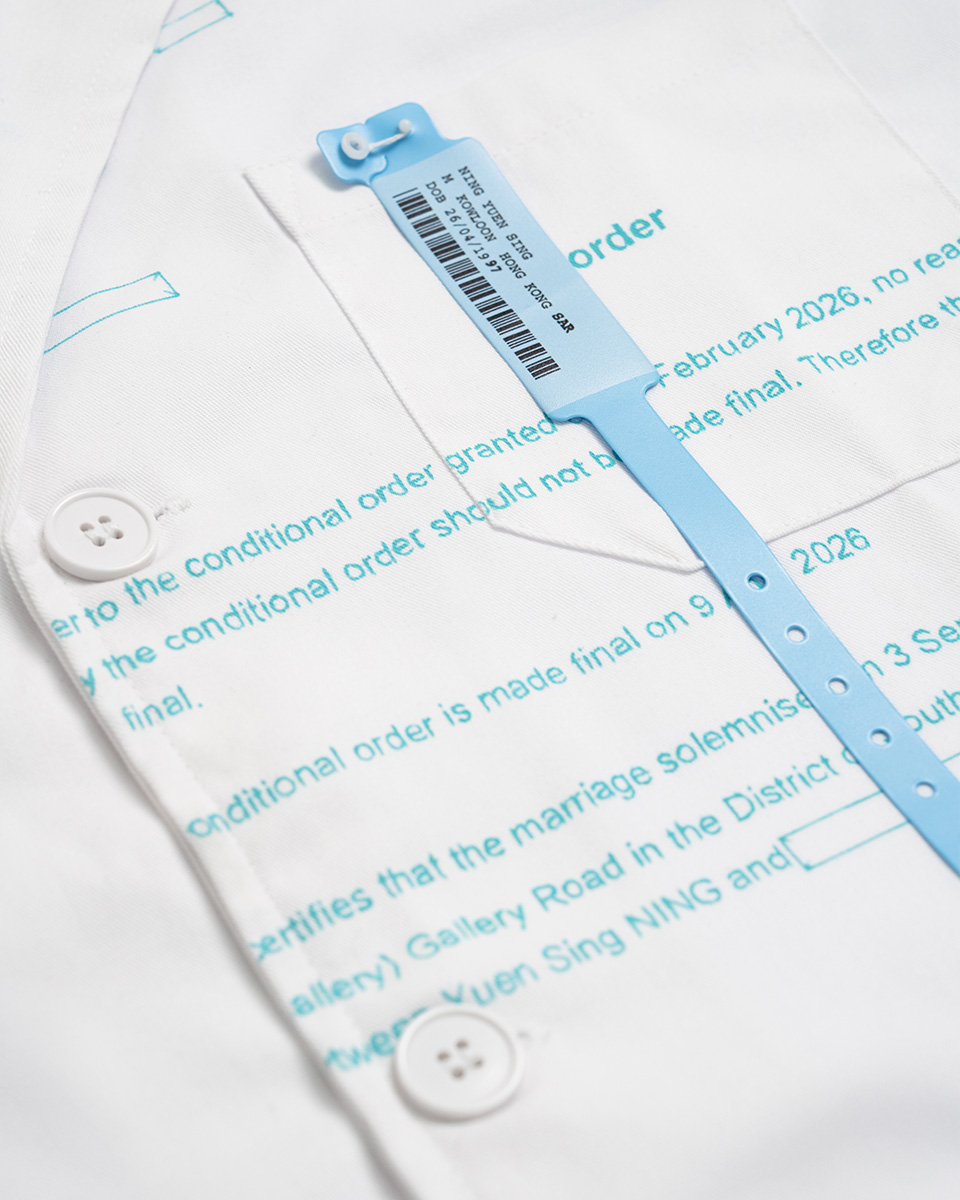
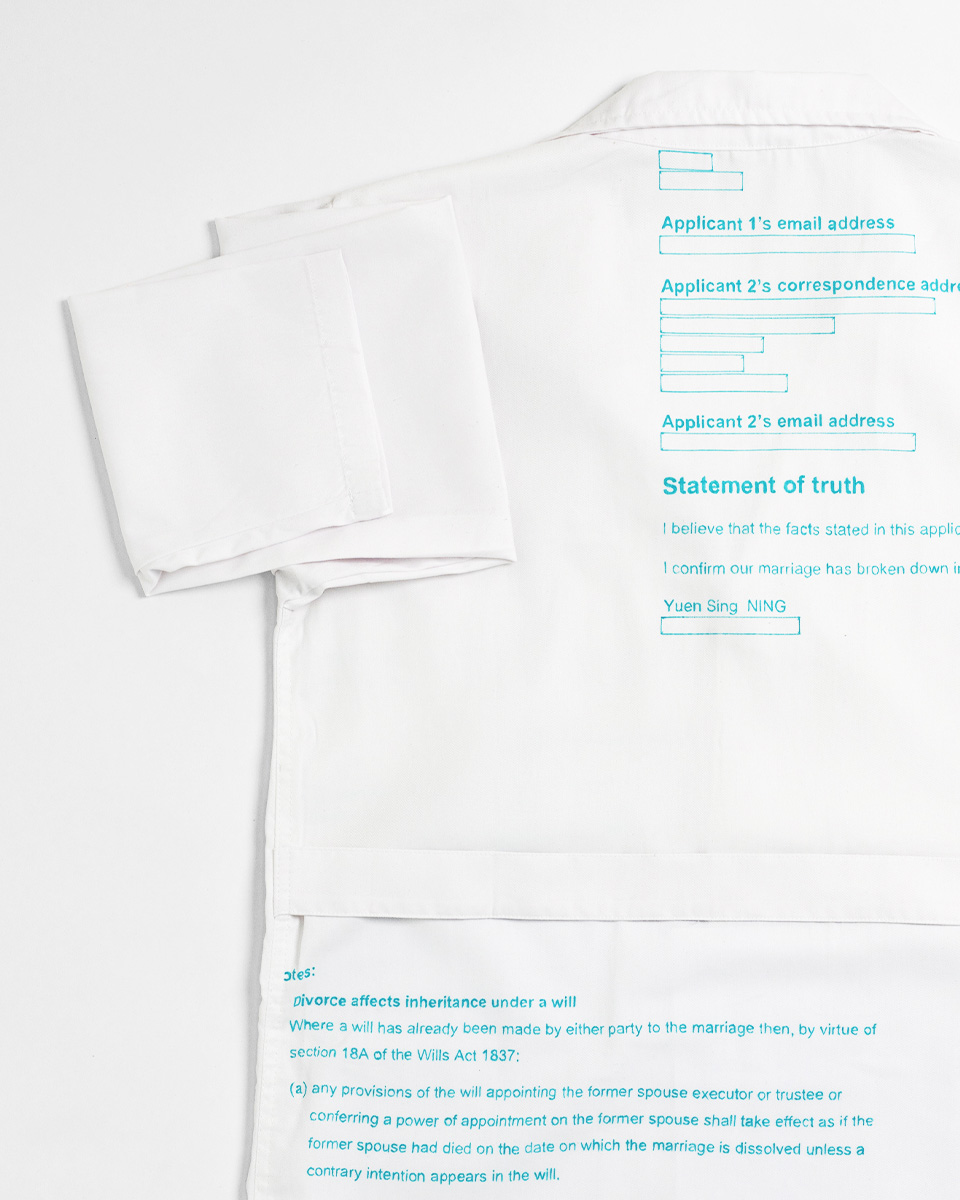
A white lab coat bearing a joint divorce application and final order in light blue is worn by the artist. The documents are carefully traced by hand, producing a delicate transcription of official records. The piece brings together legal documentation and the visual language of medical authority, while introducing a layer of mediation between source and surface.
In To Be Honest, the artist appears as the subject under examination. The role is reversed in The Examiner, as the artist assumes the position of examiner. The work adds a reflexive layer to the series, in which the act of examination turns inward and the artist becomes both the one who is assessed and the one who assesses. This piece also reflects a change in stance. In Irretrievably, the self is passively exposed and seen through. In contrast, The Examiner presents an active gesture. The artist chooses to wear the past on the body and present it openly to others. Authority is no longer external but performed and self-directed. The work collapses the distinction between patient and doctor, suggesting that self-examination is both imposed and enacted.
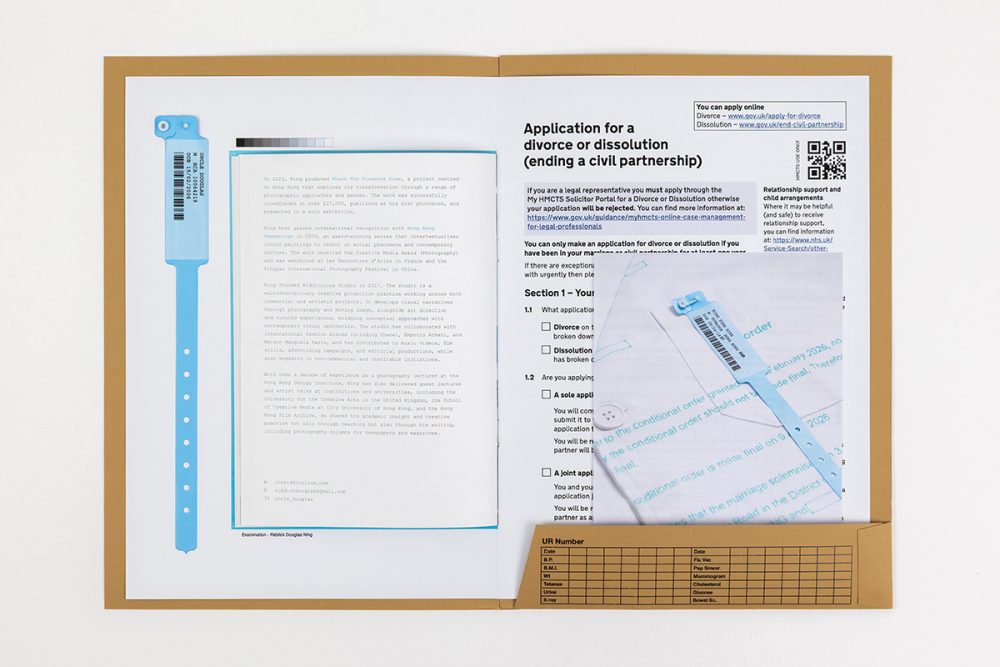
Examination: A Casebook
Year
2026
Publication
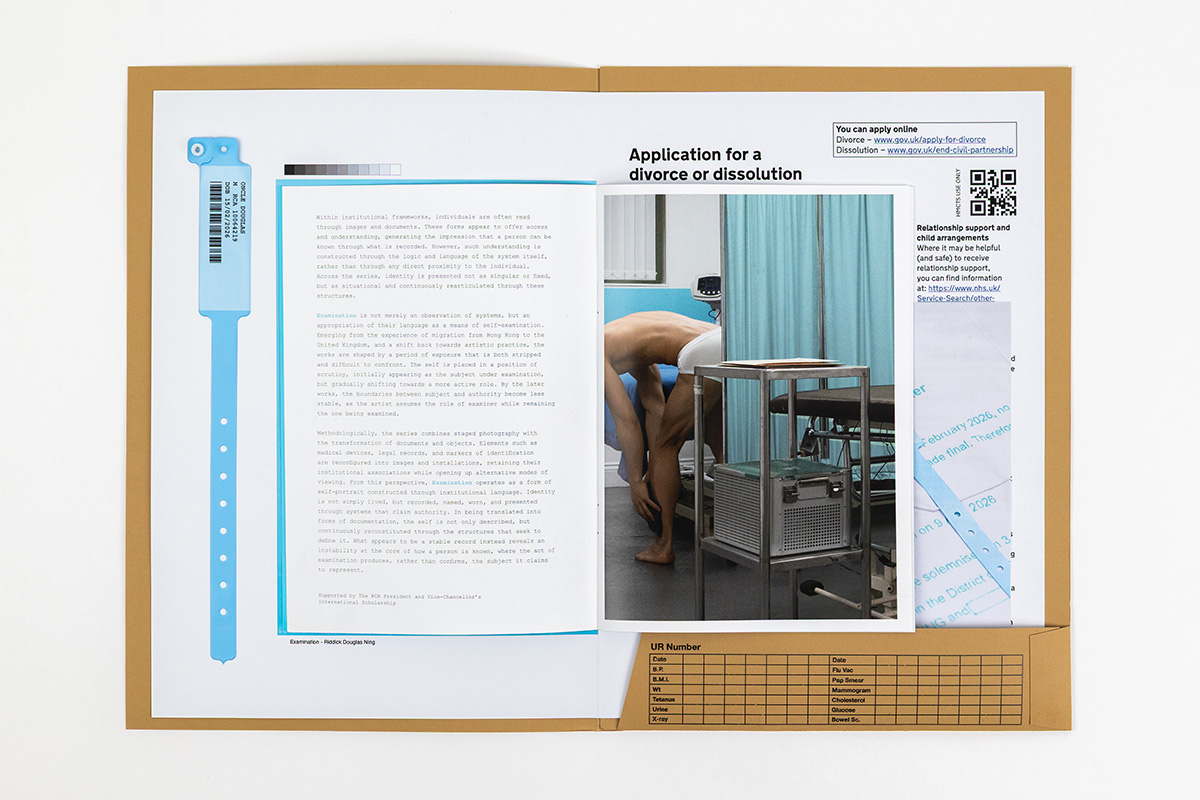
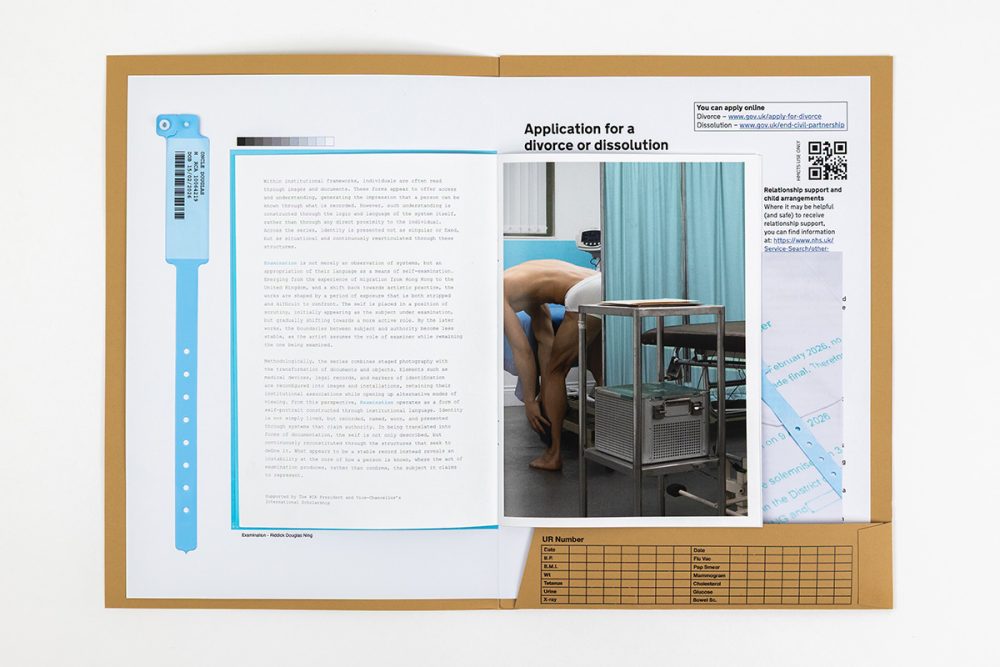
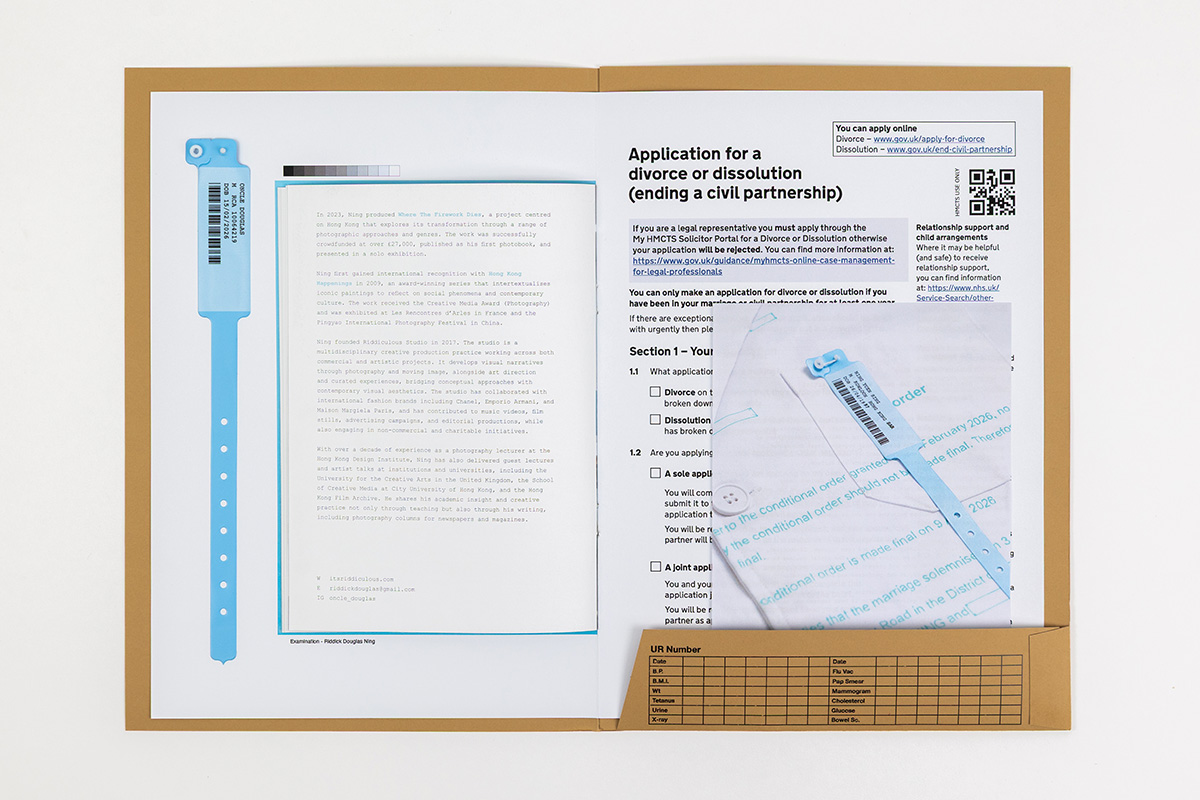
Examination: A Casebook